


Protegemos tu salud a través de la Ciencia

Investigación
Síndrome del Aceite Tóxico

Líneas de investigación
Contenidos con Investigacion .
Unidad del Síndrome de Aceite Tóxico
El Síndrome del Aceite Tóxico (SAT), surgió bruscamente en España en mayo de 1981, asociándose al consumo de un aceite de colza desnaturalizado con anilina al 2% que había sido importado para usos industriales y, desviado con posterioridad al consumo humano previa refinación. Este incidente tuvo lugar en 1981 y para llevar a cabo la investigación de este nuevo síndrome se formó lo que en ese entonces se llamaría “Centro de Investigación del SAT (CISAT)”, años después se incluirían otras Enfermedades Raras (ER) dando lugar al “Centro de Investigación sobre el Síndrome del Aceite Tóxico y Enfermedades Raras (CISATER)” y finalmente quedaría integrada la estructura organizativa del actual en el Instituto de Investigación de Enfermedades Raras, plasmada en SCO/3158/2003.

Objetivos
El IIER está encargado de la investigación del SAT, tiene los siguientes objetivos:
1. Desarrollar y promover la investigación clínico-epidemiológica sobre el Síndrome del Aceite Tóxico (SAT).
2. Desarrollar y coordinar la investigación etiológica y patogénica relacionada con el origen de esta epidemia.
3. Describir la historia natural de la enfermedad conocida como Síndrome del Aceite Tóxico (SAT).
4. Custodiar y promover el registro de muestras biológicas y de aceites.
5. Asesorar a otros Organismos de la Administración, que mantienen competencias en el SAT, en aquellos aspectos relacionados con la evolución. de la enfermedad.

Publicaciones destacadas
Toxic oil syndrome: healthrelated quality-of-life assessment using the SF-36 Health Survey. International Journal of Epidemiology, 51(2), 491–500.
DOI
Liver organoids reproduce alpha-1 antitrypsin deficiency-related liver disease
Gómez-Mariano G, Matamala N, Martínez S, Justo I, Marcacuzco A, Jimenez C, Monzón S, Cuesta I, Garfia C, Martínez MT, Huch M, Pérez de Castro I, Posada M, Janciauskiene S, Martínez-Delgado B. Liver organoids reproduce alpha-1 antitrypsin deficiency-related liver disease. Hepatol Int. 2020 Jan;14(1):127-137.
PUBMED DOIPro-tumoral Ca2+ signaling is dependent on Slowpoke and Ca-α1T channels in Drosophila melanogaster glioma.
Pro-tumoral Ca2+ signaling is dependent on Slowpoke and Ca-α1T channels in Drosophila melanogaster glioma.Alza L, Montes-Labrador P, Megías D, Casali A, Casas-Tintó S, Herreros J, Cantí C. Sci Rep. 2026 Mar 6;16(1):12297
PUBMED DOIProtective effects of crocin-enriched tomato in ageing and brain mitochondrial function using Drosophila melanogaster. García-Ricote I, Jiménez AJL, Megías D, Gavira-O Neill CE, Gómez-Gómez L, Ahrazem O, Casas-Tintó S. Biomed Pharmacother. 2026 Mar;196:119119. doi: 10.1016/j.biopha.2026.119119. Epub 2026 Feb 12. PMID: 41687549
Protective effects of crocin-enriched tomato in ageing and brain mitochondrial function using Drosophila melanogaster. García-Ricote I, Jiménez AJL, Megías D, Gavira-O Neill CE, Gómez-Gómez L, Ahrazem O, Casas-Tintó S. Biomed Pharmacother. 2026 Mar;196:119119. Epub 2026 Feb 12.
PUBMED DOIMultifunctional biofunctionalized hybrid nanoantifungals with novel active coating agents based on cinnamaldehyde- and β-cyclocitral-modified polydopamine
Multifunctional biofunctionalized hybrid nanoantifungals with novel active coating agents based on cinnamaldehyde- and β-cyclocitral-modified polydopamine. García-Simarro MP, Mondéjar-López M, García-Martínez JC, Cuesta-Casas A, Casas-Tintó S, Ahrazem O, Gómez-Gómez L, Niza E. Mater Today Bio. 2025 Dec 10;36:102645. eCollection 2026 Feb.
PUBMED DOIAdult central nervous regeneration in Drosophila : Evidence for glial lineage conversion and neurogenic potential post-injury
Adult central nervous regeneration in Drosophila : Evidence for glial lineage conversion and neurogenic potential post-injury. Casas-Tintó S, Losada-Pérez M. Neural Regen Res. 2026 Jul 1;21(7):2948-2949. Epub 2025 Nov 25.
PUBMED DOIThree Decades of the Spanish Society for Developmental Biology (SEBD): Insights and Emerging Perspectives from the 18th Spanish Society for Developmental Biology Meeting (SEBD 2024)
Three Decades of the Spanish Society for Developmental Biology (SEBD): Insights and Emerging Perspectives from the 18th Spanish Society for Developmental Biology Meeting (SEBD 2024). Herrera E, Acosta S, Almuedo M, Borrell V, Cañestro C, Casas-Tintó S, Escudero LM, Gorfinkiel N, Hoijman E, Pastor-Pareja JC, Pernaute B, Rayón T, Saade M, Solana J, Trivedi V, Martí E, Pujades C, Araújo SJ. Int J Dev Biol. 2025;69(1):1-9. doi: 10.1387/ijdb.250034sa. PMID: 40298871
PUBMED DOIVP3.15, a dual GSK-3β/PDE7 inhibitor, reduces glioblastoma tumor growth though changes in the tumor microenvironment in a PTEN wild-type context
VP3.15, a dual GSK-3β/PDE7 inhibitor, reduces glioblastoma tumor growth though changes in the tumor microenvironment in a PTEN wild-type context. Castello-Pons M, Ramirez-Gonzalez MA, Iglesias-Hernández P, Lendo NL, Rodriguez-Martín C, Quiralte L, Sepúlveda-Sánchez JM, de Dios O, Gil C, Martínez A, Sánchez-Gómez P, Casas-Tinto S. Neurotherapeutics. 2025 Jul;22(4):e00576. Epub 2025 Mar 28.
PUBMED DOIComprehensive reanalysis for CNVs in ES data from unsolved rare disease cases results in new diagnoses. NPJ Genom Med. 2024 Oct 26;9(1):49
Demidov G, Yaldiz B, Garcia-Pelaez J, de Boer E, Schuermans N, Van de Vondel L, Paramonov I, Johansson LF, Musacchia F, Benetti E, Bullich G, Sablauskas K, Beltran S, Gilissen C, Hoischen A, Ossowski S, de Voer R, Lohmann K, Oliveira C, Topf A, Vissers LELM; Solve-RD Consortium; Laurie S.
PUBMED DOIPushing the boundaries of rare disease diagnostics with the help of the first Undiagnosed Hackathon. Nat Genet. 2024 Nov;56(11):2287-2294
Delgado-Vega AM, Cederroth H, Taylan F, Ekholm K, Ek M, Thonberg H, Jemt A, Nilsson D, Eisfeldt J, Bilgrav Saether K, Höijer I, Akgun-Dogan O, Asano Y, Barakat TS, Batkovskyte D, Baynam G, Bodamer O, Chetruengchai W, Corcoran P, Couse M, Danis D, Demidov G, Dohi E, Erhardsson M, Fernandez-Luna L, Fujiwara T, Garg N, Giugliani R, Gonzaga-Jauregui C, Grigelioniene G, Groza T, Gunnarsson C, Hammarsjö A, Hammond CK, Hatirnaz Ng Ö, Hesketh S, Hettiarachchi D, Johansson Soller M, Kirmani UA, Kjellberg M, Kvarnung M, Kvlividze O, Lagerstedt-Robinson K, Lasko P, Lassmann T, Lau LYS, Laurie S, Lim WK, Liu Z, Lysenkova Wiklander M, Makay P, Maiga AB, Maya-González C, Meyn MS, Neethiraj R, Nigro V, Nordgren F, Nordlund J, Orrsjö S, Ottosson J, Ozbek U, Özdemir Ö, Partin C, Pearce DA, Peck R, Pedersen A, Pettersson M, Pongpanich M, Posada de la Paz M, Ramani A, Romero JA, Romero VI, Rosenquist R, Saw AM, Spencer M, Stattin EL, Srichomthong C, Tapia-Paez I, Taruscio D, Taylor JP, Tkemaladze T, Tully I, Tümer Z, van Zelst-Stams WAG, Verloes A, Västerviga E, Wang S, Yang R, Yamamoto S, Yépez VA, Zhang Q, Shotelersuk V, Wiafe SA, Alanay Y, Botto LD, Kirmani S, Lumaka A, Palmer EE, Puri RD, Wirta V, Lindstrand A, Buske OJ, Cederroth M, Nordgren A.
PUBMED DOICIBERER: Spanish national network for research on rare diseases: A highly productive collaborative initiative. Clin Genet. 2022 May 10; 1(5-6):481-493
Luque J, Mendes I, Gómez B, Morte B, López de Heredia M, Herreras E, Corrochano V, Bueren J, Gallano P, Artuch R, Fillat C, Pérez-Jurado LA, Montoliu L, Carracedo Á, Millán JM, Webb SM, Palau F; CIBERER Network; Lapunzina P..
PUBMED DOIPrevalence of dystrophic epidermolysis bullosa in Spain: a population-based study using the 3-source capture-recapture method. Evidence of a need for improvement in care. Actas Dermosifiliogr. 2013 Dec;104(10):890-6
Hernandez-Martín A, Aranegui B, Escámez MJ, de Lucas R, Vicente A, Rodríguez-Díaz E, Bernabeu-Wittel J, Gonzalez-Hermosa R, García-Patos V, Ginarte M, Mascaró JM Jr, Corredera C, Baselga E, Santiago JL, Chaves A, Román C, Evole M, Martin-Santiago A, Torrelo A, Del Río M, Feito M, Gonzalez-Enseñat MA, Romero G, Morcillo-Makow E, Abaitua I, García-Doval I.
PUBMED DOIOverview of existing initiatives to develop and improve access and data sharing in rare disease registries and biobanks worldwide. Expert Opinion on Orphan Drugs, 4(7), 729–739
López-Martín E, Thompson R, Gainotti S, Wang CM, Rubinstein Y, Taruscio D, Monaco L, Lochmüller H, Alonso-Ferreira V, Posada de la Paz M.
DOICREBBP/EP300 bromodomain inhibition affects the proliferation of AR positive breast cancer cell lines. (2019) Molecular Cancer Research. 17 (3): 720–730.
Garcia-Carpizo V, Ruiz-Llorente S, Sarmentero J, Gonzalez-Corpas A and Barrero MJ.
DOICREBBP/EP300 bromodomains are critical to sustain the GATA1/MYC regulatory axis in proliferation. (2018) Epigenetics and Chromatin 11:30.
Garcia-Carpizo V, Ruiz-Llorente S, Sarmentero J, Graña O, Pisano DG and Barrero MJ.
DOINSD2 contributes to oncogenic RAS-driven transcription in lung cancer cells through long-range epigenetic activation. (2016) Scientific Reports. 6:32952.
Garcia-Carpizo V, Sarmentero J, Han B, Graña O, Ruiz-Llorente S, Pisano DG, Serrano M, Brooks HB, Campbell RM, Barrero MJ.
DOISETD7 Regulates the Differentiation of Human Embryonic Stem Cells. (2016) PLoS One. 11(2): e0149502.
Castaño J, Morera C, Sesé B, Boue S, Bonet-Costa C, Martí M, Roque A, Jordan A, Barrero MJ.
DOIMacro Histone Variants are Critical for the Differentiation of Human Pluripotent Cells. (2013) Journal of Biological Chemistry. 288(22):16110-6.
Barrero MJ, Sese B, Marti M and Izpisua Belmonte JC.
DOIMacro Histone Variants Preserve Cell Identity by Preventing the Gain of H3K4me2 during Reprogramming to Pluripotency. (2013) Cell Reports 3, 1005–1011.
Barrero MJ, Sese B, Kuebler B, Bilic J, Boue S, Martí M, Belmonte JC.
DOIMediator-regulated transcription through the +1 nucleosome. (2012) Molecular Cell. 48(6):837-48.
Nock A, Ascano JA, Barrero MJ and Malik S.
DOIAlu-repeat mediated regulation of DIEXF expression in cell differentiation and cancer. (2020) Epigenetics 15(6-7):765-779.
Martín B, Pappa S. Díez-Villanueva A, Mallona I, Custodio J, Barrero MJ, Peinado MA, Jordà M.
DOIDNA Methylomes Reveal Biological Networks Involved in Human Eye Development, Functions and Associated Disorders. Sci Rep. (2017) 7(1):11762.
Berdasco M, Gómez A, Rubio MJ, Català-Mora J, Zanón-Moreno V, Lopez M, Hernández C, Yoshida S, Nakama T, Ishikawa K, Ishibashi T, Boubekeur AM, Louhibi L, Pujana MA, Sayols S, Setien F, Corella D, de Torres C, Parareda A, Mora J, Zhao L, Zhang K, Lleonart ME, Alonso J, Simó R, Caminal JM, Esteller M.
PUBMED DOIEWS-FLI1-mediated suppression of the RAS-antagonist Sprouty 1 (SPRY1) confers aggressiveness to Ewing sarcoma. Oncogene (2017) 36(6):766-776.
Cidre-Aranaz F, Grünewald TG, Surdez D, García-García L, Carlos Lázaro J, Kirchner T, González-González L, Sastre A, García-Miguel P, López-Pérez SE, Monzón S, Delattre O, Alonso J.
PUBMED DOIFamilial retinoblastoma due to intronic LINE-1 insertion causes aberrant and non-canonical mRNA splicing of the RB1 gene. J Hum Genet (2016) 61(5):463-6.
Rodríguez-Martín C., Cidre-Aranaz F., Fernández-Teijeiro A., Gómez-Mariano G., de la Vega L., Ramos P., Zaballos A., Monzón S., Alonso J.
PUBMED DOIChimeric EWSR1-FLI1 regulates the Ewing sarcoma susceptibility gene EGR2 via a GGAA-microsatellite. Nature Genetics (2015) 47(9):1073-8.
Grünewald T.G.P., Bernard V., Gilardi-Hebenstreit P., Raynal V., Surdez D., Aynaud M.M., Mirabeau O., Cidre-Aranaz F., Tirode F., Zaidi S., Perot G., Jonker A.H., Lucchesi C., Le Deley M.C., Oberlin O., Marec-Bérard P., Véron A.S., Reynaud S., Lapouble E., Boeva V., Frio T.R, Alonso J., Bhatia S., Pierron G., Cancel-Tassin G., Cussenot O., Cox D.G., Morton L.M., Machiela M., Chanock S.J., Charnay P., Delattre O.
PUBMED DOISelective inhibition of plasma membrane calcium ATPase4 improves angiogénesis and vascular reperfusion. 2017. J. Mol. Cell. Cardiol. 109: 38-47.
Kurusamy S., López-Maderuelo D., Little R., Cadagan D., Savage A.M., Ihugba J.C., Baggott RR, Rowther FB., Martínez-Martínez S, Gómez-del Arco P., Murcott C., Wang W., Nistal F.J., Oceandy D, Neyses L, Wilkinson R.N., Cartwright EJ, Redondo J.M. and A.L. Armesilla.
PUBMED DOIThe Chromatin Remodeling Complex Chd4/NuRD controls striated muscle identity and metabolic homeostasis. 2016. Cell Metabolism. 23: 881-892.
Gómez-del Arco P*., Perdiguero E., Yunes-Leites P.S., Acín-Pérez R., Zeini M., García-Gómez A., Sreenivasan K., Jiménez-Alcázar M., Segalés J., López-Maderuelo D., Ornés B., Jiménez-Borreguero L.J., D´Amato G., Enshell-Seijffers D., Morgan B., Georgopoulos K., Islam AbuL B.M.M.K., Braun T., de la Pompa J.L., Kim J., Enriquez J.A., Ballestar E,, Muñoz-Cánoves P. and Redondo J.M*. *corresponding authors.
PUBMED DOISequential ligand-dependent Notch signaling activation regulates valve primordium formation and morphogenesis. 2016. Circulation Research. 118 (10): 1480-1497.
MacGrogan D., D´Amato G., Travisano S., Martinez-Poveda B., Luxán G., del Monte-Nieto G., Papoutsi T., Sbroggio M., Bou V., Gómez-del Arco P., Gómez M.J., Zhou B., Redondo J.M., Jiménez-Borreguero L.J., de la Pompa J.L.
PUBMED DOIPlasma membrane calcium ATPase isoform 4 inhibits vascular endothelial growth factor-mediated angiogenesis through interaction with calcineurin. 2014. Arterioscler. Thromb. Vasc. Biol. Volumen: 34: 2310-2320.
Baggott RR, Alfranca A, López-Maderuelo D, Mohamed TM, Escolano A, Oller J, Ornes BC, Kurusamy S, Rowther FB, Brown JE, Oceandy D, Cartwright EJ, Wang W, Gómez-del Arco P, Martínez-Martínez S., Neyses L, Redondo JM, Armesilla AL.
PUBMED DOIContenidos con Investigacion .
-
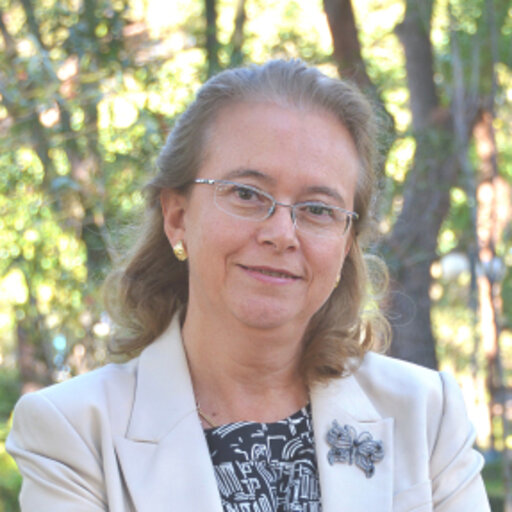
María Eva Bermejo Sánchez
E. Investigadores Científicos de OPIs (A2). Directora del IIER
Código ORCID: 0000-0001-7282-2714
-
Verónica Alonso Ferreira
E. Investigadores Científicos de OPIs (A2). Jefa del Área de Epidemiología.
Código ORCID: 0000-0002-8560-1336
EPIDEMIOLOGÍA DE ENFERMEDADES RARAS
SÍNDROME DEL ACEITE TÓXICO
CIBERER
-
Greta Arias Merino
Doctor fuera de convenio
Código ORCID: 0000-0002-4478-3153
SÍNDROME DEL ACEITE TÓXICO

Listado de personal
Información adicional
Tesis doctorales defendidas
- Olga Giménez Ribota. (2009). Evolución Clínica y Causas de Muerte de los Pacientes Fallecidos de la Cohorte de Afectados por el Síndrome del Aceite Tóxico. Directores: Rodrigo Jiménez García y Manuel Posada de la Paz. Universidad Rey Juan Carlos.
- María Luisa García de Aguinaga. (2004). Factores de riesgo cardiovascular en la cohorte del Síndrome del Aceite Tóxico. Directores: Javier Barbado y Manuel Posada de la Paz. Universidad Autónoma de Madrid.
- Eva Estirado de Cabo. (2004). El síndrome del túnel del carpo en el Síndrome del Aceite Tóxico. Directores: Juan Martínez López de Letona y Manuel Posada de la Paz. Universidad Autónoma de Madrid.
- María del Mar Plaza Cano. (2004). Hipotiroidismo y el Síndrome del Aceite Tóxico. Directores: Ángel del Palacio Pérez-Medel y Manuel Posada de la Paz. Universidad Autónoma de Madrid.
- Manuel Posada de la Paz. (2002). Registro de morbi-mortalidad de los pacientes con síndrome del aceite tóxico aplicaciones científicas de un estudio poblacional. Director: Juan Martínez López de Letona. Universidad Autónoma de Madrid.
Tesis doctorales en curso
- Rodrigo Sarmiento Suárez. Efectos a largo plazo en la salud de la población afectada por el Síndrome del Aceite Tóxico. Directores: Greta Arias Merino y Eva Bermejo Sánchez. Universidad Autónoma de Madrid.
PROYECTOS DE INVESTIGACIÓN
Un total de 8 proyectos financiados por la OMS y 14 financiados por agencias nacionales (fundamentalmente el FIS).
Comités internacionales relacionados con el SAT
Los miembros del CISAT fueron nominados por la OMS como:
- Temporary advisor WHO/FIS Joint Commission for the Study of TOS Copenhagen - Atlanta 1986 - 1994.
- Temporary advisor WHO/CISAT Scientific Committee for the Study Of TOS. Copenhagen - Mayo 1994 – 2006.
Resultados de investigación
Seguimiento de la Cohorte SAT (Síndrome del Aceite Tóxico)
Seguimiento de la cohorte de personas afectadas por el Síndrome del Aceite Tóxico (SAT) 1981-2023

Calidad de vida de las Personas Afectadas por el Síndrome del Aceite Tóxico (SAT)
Evaluación de la calidad de vida relacionada con la Salud - SF36 v2

Evaluación del estado de salud de las personas afectadas por el Síndrome del Aceite Tóxico (SAT)
Evaluación del estado de la salud de los pacientes con Síndrome del Aceite Tóxico (SAT) mediante cuestionarios HAQ y PHQ-9
